
The Lithium Triangle is the informal name for a high-altitude Andean region. It spans Argentina, Bolivia, and Chile.
There, ancient geology and extreme aridity have concentrated lithium in vast underground brine deposits. These deposits sit in porous rock beneath salt flats known locally as salars. They represent the world’s largest known concentration of lithium resources.
The term triangle refers to the rough geographic shape the three countries form on a map.
At its center are salt flats ranging from a few hundred to several thousand square kilometers. They sit at elevations of 3,500 to 5,000 meters above sea level.
High-altitude evaporation rates and low annual rainfall made these regions ideal for conventional brine lithium production. That method relies on solar evaporation to concentrate lithium over time.
The Scale of South America’s Lithium Resources
The scale of lithium resources in this region is difficult to overstate in terms of global significance.
According to the US Geological Survey Mineral Commodity Summaries 2025, these countries hold over half of identified global lithium resources.
Bolivia holds the largest lithium resource of any country globally, estimated at approximately 21 to 23 million metric tons. It is concentrated primarily in the Salar de Uyuni. That is the world’s largest salt flat at approximately 11,000 square kilometers.
Argentina holds approximately 22 to 23 million metric tons. These span multiple salt flat deposits in its northwestern provinces of Jujuy, Salta, and Catamarca.
Chile holds approximately 9.3 to 11 million metric tons. It is concentrated primarily in the Salar de Atacama in the Antofagasta region.
Bolivia and Argentina hold the largest resources by volume. Yet Chile is currently the dominant producer, with output of approximately 49,000 tonnes in 2024.
Argentina produced approximately 18,000 tonnes in the same period. Bolivia’s commercial production remains in the hundreds of tonnes despite holding the world’s largest lithium reserve base.
Chile, Argentina, and Bolivia: How Each Country Approaches Lithium Development
The three Lithium Triangle countries have comparable geological endowments. Yet they have taken distinct approaches to lithium development. These reflect different economic policies, political conditions, and regulatory frameworks.
Chile is the most established producer and the second-largest lithium exporter globally. Production is concentrated in the Salar de Atacama, where SQM and Albemarle operate under government concessions.
The Chilean government has moved toward increased state participation. Future lithium concessions must include a majority stake for state mining company Codelco.
Foreign investors can participate within this structured partnership framework. But the terms have become more complex than in previous decades.
Argentina operates a more decentralized model. Significant regulatory authority sits at the provincial level rather than nationally.
This has allowed more projects to advance at different speeds across provinces. Jujuy, Salta, and Catamarca have each developed their own investment frameworks.
Argentina had more than 80 active lithium projects at various stages as of 2024. That made it the most active lithium development frontier in the region.
Bolivia holds the world’s largest lithium resource but has produced commercially at minimal scale. This reflects its explicitly state-led development model and the technical challenges of developing the Salar de Uyuni.
Uyuni brine has a more complex chemistry than the Atacama or Argentine salars. It has higher magnesium content relative to lithium.
Bolivia has pursued direct lithium extraction technology agreements with Chinese investors. These address this technical challenge while retaining majority state control over operations.
Why the Lithium Triangle Is Central to the Global Battery Supply Chain
The battery supply chain serves electric vehicles, grid storage, and consumer electronics. It depends on battery-grade lithium carbonate and lithium hydroxide produced from primary lithium resources.
The Lithium Triangle is the world’s largest concentration of brine-based lithium. It supplies a substantial share of the lithium entering the global battery supply chain.
Chile and Argentina together accounted for approximately 97% of US lithium imports between 2020 and 2023, according to USGS data.
For the United States, building domestic lithium supply capacity is a national security priority. The Lithium Triangle is both the current primary source of imported lithium and the benchmark for domestic alternatives.
Domestic projects aim to close that gap. EnergyX’s Project Powder Hound™ in Utah targets large-scale US lithium production from Great Salt Lake brine.
Direct lithium extraction technology is beginning to change the production parameters across the region.
DLE systems extract lithium in 1 to 2 days without relying on solar evaporation. This enables faster production, higher lithium recovery, and a significantly smaller water and land footprint.
Companies applying DLE technology in the Lithium Triangle can develop resources that conventional evaporation ponds would leave unviable.
Environmental and Geopolitical Considerations for Investors
Investors and supply chain partners should understand the risks of Lithium Triangle exposure. These risks differ from those in mining projects in more conventional jurisdictions.
Resource nationalism has increased across all three countries. Bolivia’s state-led model limits foreign ownership and control, with ongoing political tension around investment terms.
Chile’s shift toward mandatory Codelco partnerships introduces new commercial complexity. Argentina’s decentralized framework creates variability between provincial jurisdictions.
Environmental considerations are increasingly material to permitting and community relations.
Conventional evaporation pond production consumes freshwater in regions where it is scarce. That water is shared with indigenous communities and agricultural users.
Projects in areas with significant indigenous populations face growing requirements for prior consultation and community benefit arrangements.
DLE technology has a lower water footprint and reduced surface disruption. This offers a more defensible environmental profile in permitting processes.
The Lithium Triangle sits within broader competition among the United States, China, and the European Union. That competition is over supply chain positioning in critical minerals.
Chinese capital has entered all three countries in various forms. Meanwhile, US policy through the IRA and EXIM Bank steers capital toward projects meeting domestic or allied-nation requirements.
EnergyX’s Operations in the Lithium Triangle: Project Black Giant™
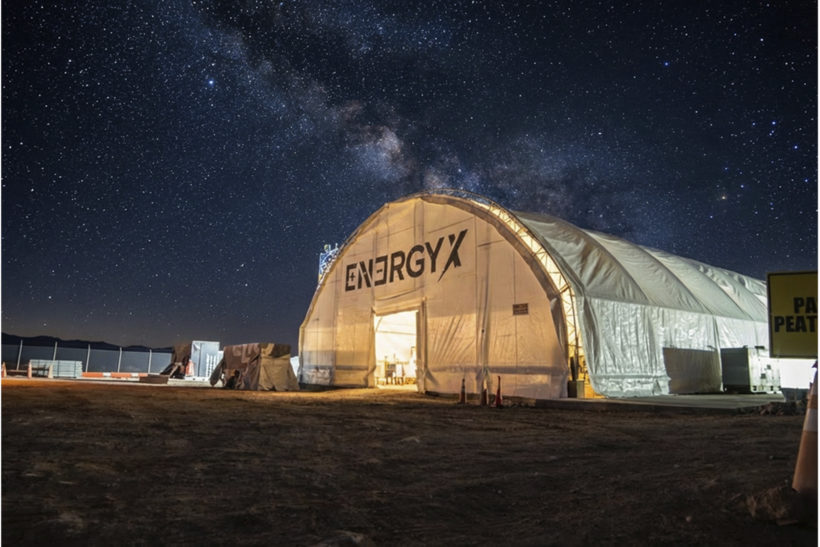
EnergyX has a direct operational presence in the Lithium Triangle through Project Black Giant™. This Chilean lithium development project is located near Salar de Punta Negra in the Antofagasta region.
The project covers approximately 100,000 acres. It holds an estimated 4.5 to 9.8 million metric tons of lithium in situ.
A Pre-Feasibility Study was completed in September 2025. Goldman Sachs was engaged as financial advisor. The US Export-Import Bank issued a letter of interest representing $690 million in project finance support.
EnergyX’s GET-Lit™ direct lithium extraction platform is the planned production method for the project. It targets battery-grade lithium production with a smaller environmental footprint than conventional evaporation ponds at the same site.
Full project detail is available on the Project Black Giant™ page.
What International Investors and Partners Need to Know
Investors and industrial partners are evaluating exposure to Lithium Triangle resources. The key considerations are resource quality, jurisdiction risk, technology approach, and production timeline.
Resource quality varies significantly by project and location.
Brine chemistry, lithium concentration, the magnesium-to-lithium ratio, and geological depth all affect production cost and technical complexity.
Projects in the Salar de Atacama consistently show high lithium concentration and favorable ion ratios.
Other salars, including Uyuni, require more technically demanding processing regardless of their total resource scale.
Jurisdiction selection matters as much as resource quality. Chile, Argentina, and Bolivia each present different risk profiles on resource nationalism, permitting timelines, and infrastructure availability.
Projects in Argentina may advance more quickly under more flexible provincial frameworks. Chilean and Bolivian projects require navigation of increasing state participation requirements.
Technology selection is a growing differentiator across the region.
Direct lithium extraction offers environmental and operational advantages. These are becoming relevant to permitting, community relations, and production economics.
Projects designed around DLE from the outset are better positioned as environmental standards tighten across all three jurisdictions.
EnergyX is currently conducting a securities offering under Regulation A of the Securities Act of 1933. Investors interested in EnergyX’s Lithium Triangle operations and broader lithium portfolio can access offering details at invest.energyx.com.
Frequently Asked Questions
What is the Lithium Triangle?
The Lithium Triangle is the high-altitude Andean region spanning Argentina, Bolivia, and Chile. Its underground brine deposits in salt flat formations hold the world’s largest concentration of known lithium resources. Together the three countries hold more than half of global identified lithium resources.
Which country in the Lithium Triangle produces the most lithium?
Chile is the dominant producer, with approximately 49,000 tonnes produced in 2024. Argentina produced approximately 18,000 tonnes in the same period. Bolivia holds the world’s largest lithium resource by volume but produces at minimal commercial scale.
Why is Chile the dominant producer despite not having the largest reserves?
Chile’s Salar de Atacama has favorable brine chemistry. Its high lithium concentration and low magnesium-to-lithium ratio make extraction relatively straightforward and cost-competitive. Chile also has established mining infrastructure, a longer production track record, and proximity to Pacific shipping routes.
What are the main risks of investing in Lithium Triangle projects?
Key risks include resource nationalism and regulatory change in all three countries. Others are permitting and environmental challenges, plus water use concerns in arid regions shared with indigenous communities. Infrastructure limitations and geopolitical competition among major powers for critical mineral supply chains add further risk.
How does direct lithium extraction change the Lithium Triangle opportunity?
DLE systems extract lithium in 1 to 2 days without solar evaporation. They use less water and a smaller land footprint than evaporation ponds. This makes DLE viable where conventional production would be constrained, and strengthens permitting in jurisdictions with rising environmental scrutiny.
What is EnergyX’s presence in the Lithium Triangle?
EnergyX operates Project Black Giant™ near Salar de Punta Negra in Chile, covering about 100,000 acres. In situ lithium is estimated at 4.5 to 9.8 million metric tons, per a 2025 Pre-Feasibility Study. Goldman Sachs and the US Export-Import Bank back it; see energyx.com/projects/project-black-giant/.
Sources
Lithium Triangle resources, country reserves, and 2024 production: US Geological Survey, Mineral Commodity Summaries 2025.
Chile and Argentina share of US lithium imports: US Geological Survey.
Lithium Triangle holding over half of global resources: Fastmarkets.
EnergyX Project Black Giant (PFS, Goldman Sachs, EXIM): EnergyX.
EnergyX Project Powder Hound: EnergyX.
EnergyX securities offering: EnergyX investment portal.
This article is for informational purposes only and does not constitute investment advice. Any reference to EnergyX’s securities offering is for informational context only. The EnergyX offering is made only by the official offering circular available at invest.energyx.com. Investing in early-stage companies involves significant risk including potential loss of the entire investment. Please read all risk disclosures carefully before investing.